
The POWER of Black + White
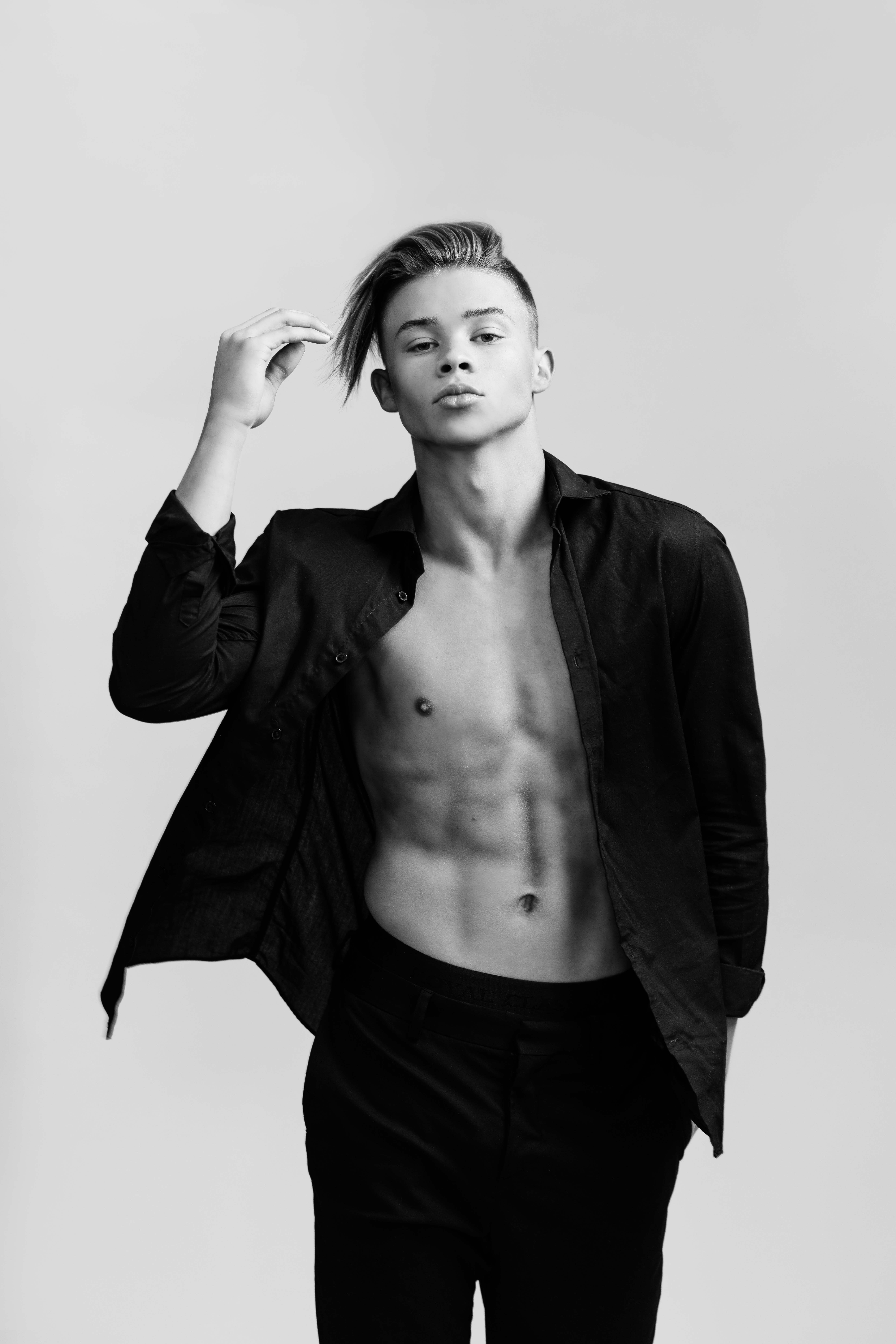
EMOTION. BEAUTY. STRENGTH.
As a little girl I would sit for hours flipping through my moms old photo albums; images of family and friends, past and present. The images that always stood out to me the most were the portraits; mostly in black and white – images of emotion, real, raw truth, and beauty. I felt a connection to each of those photographs as if I had taken them myself, especially the images of my mother, grandmother, and other powerful women in my life. They inevitably set the tone for the type of photography I would one day create, long before I ever understood those roots.
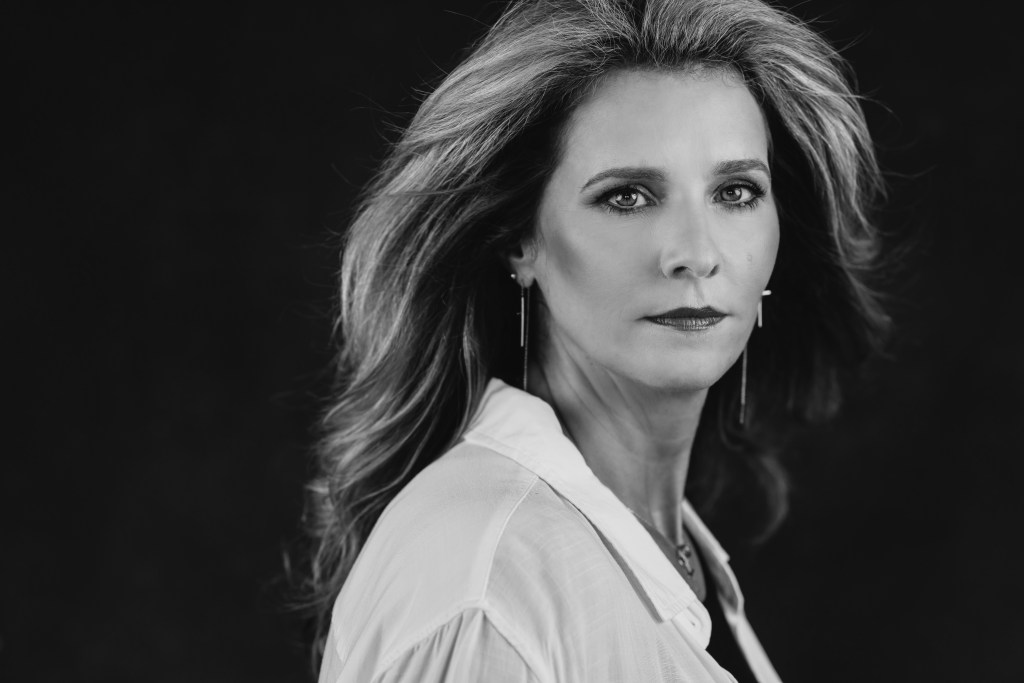
Author’s Portrait by Nick Fancher
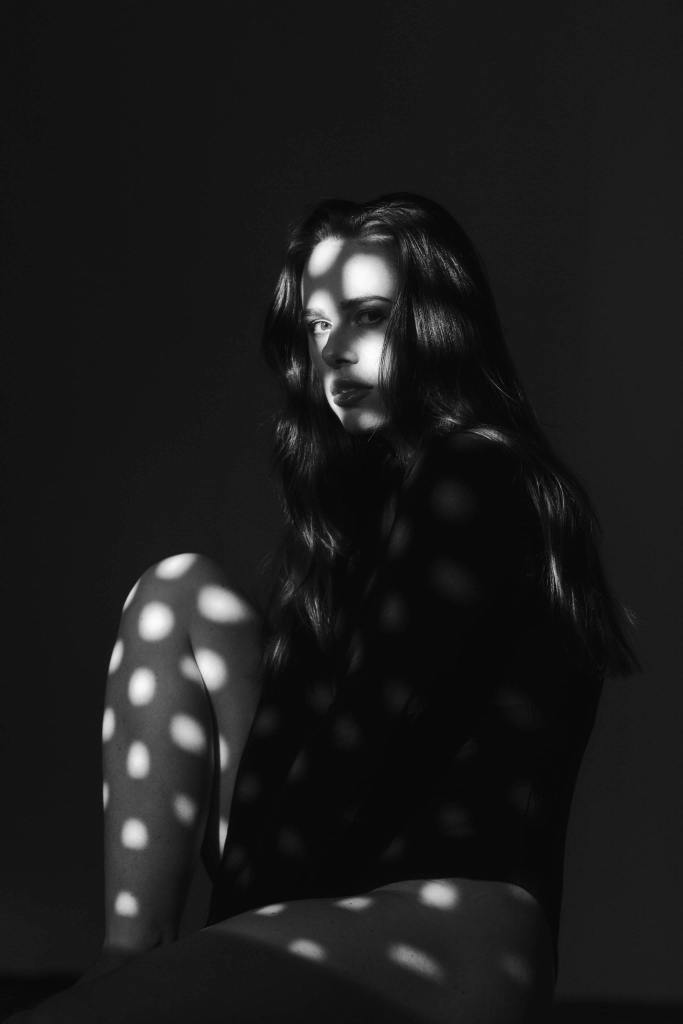
Black and white processing puts power behind even the simplest portrait; expressing emotion, beauty, true self, and strength without distraction or senescence of time. There is more power in that than words can express.
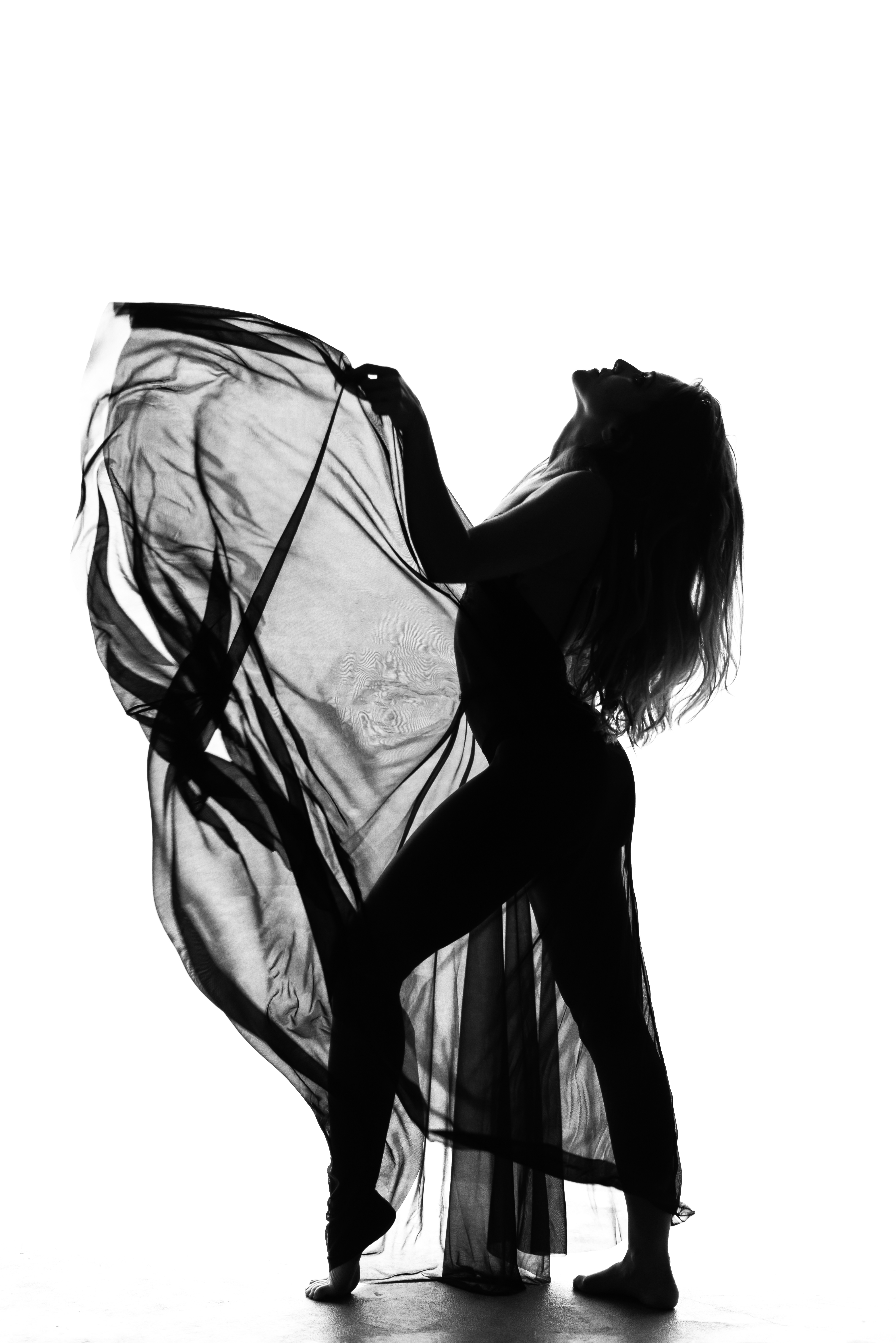

It emphasizes texture, form, angles, light and shadow and allows us to focus on the emotion of an image without being sidetracked with everything around us. In my experience, the pieces I create with soft, yet deep, black and white processing end up the most timeless and meaningful of all to my clients. We aren’t trying to change what is with black and white photography, we’re embracing it, and ultimately our subjects feel more like themselves than ever before. Color can be very surface level, while black and white goes deeper, it transfixes the skin and touches a piece of the soul.
LIGHT + SHADOW
TEXTURE. FORM. ANGLES.
So how do we go about creating a timeless black and white image that captures a piece of who our subject truly is?
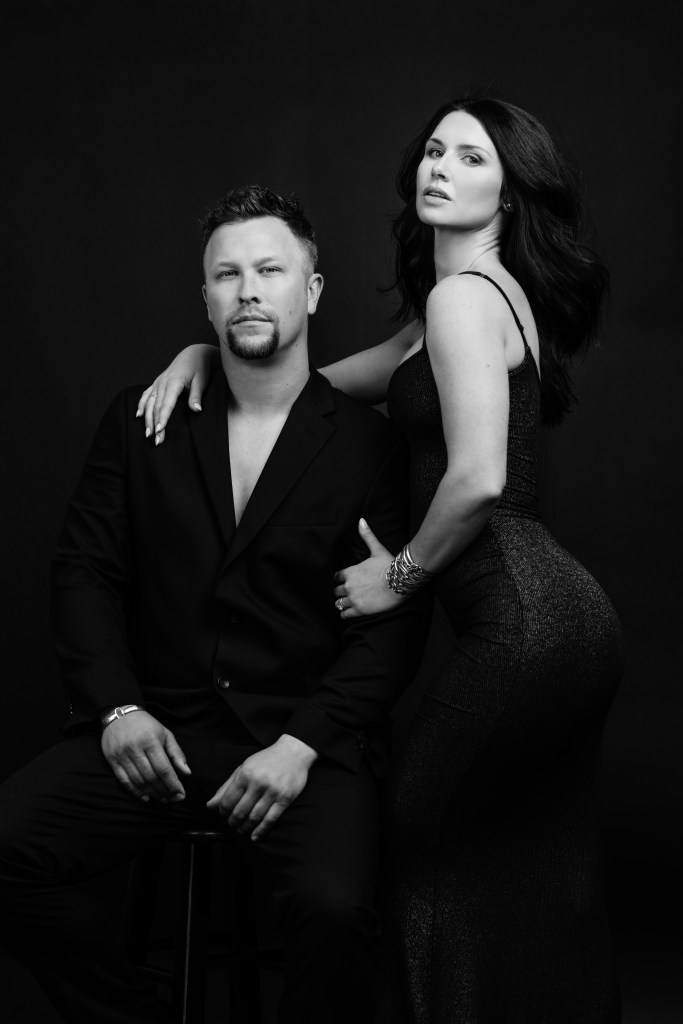
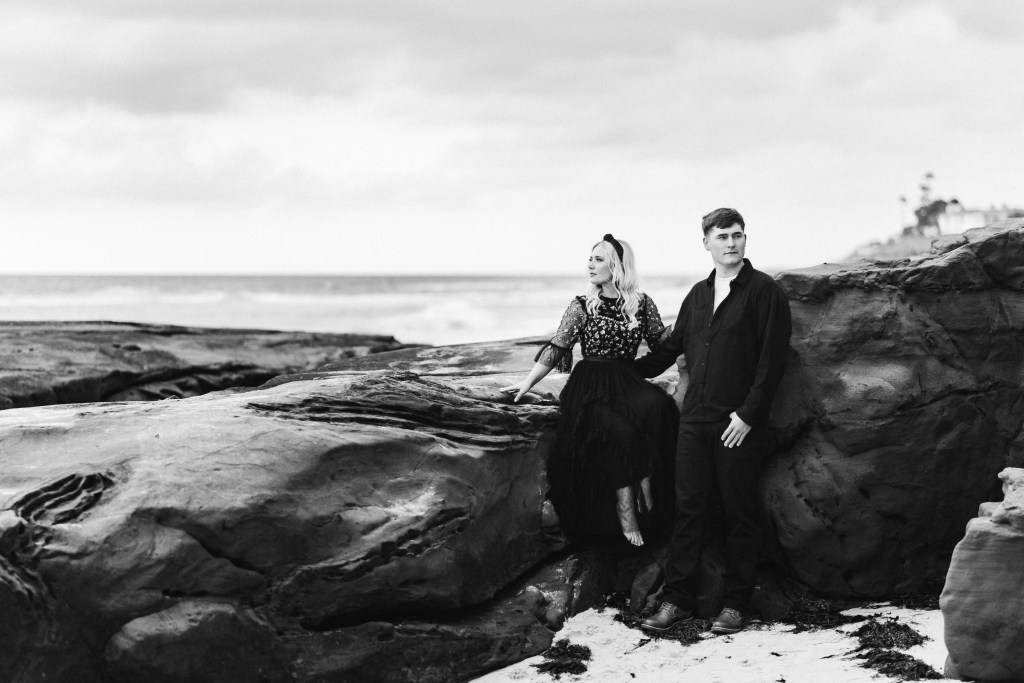
As with most genres of portraiture, our main goal as photographers is to create flattering images of our subjects. My very first thoughts go to posing that works best for each specific client and how to set up my lighting to emphasize their best features and create stylized depth and shadow that will allow for a seamless post processing edit.
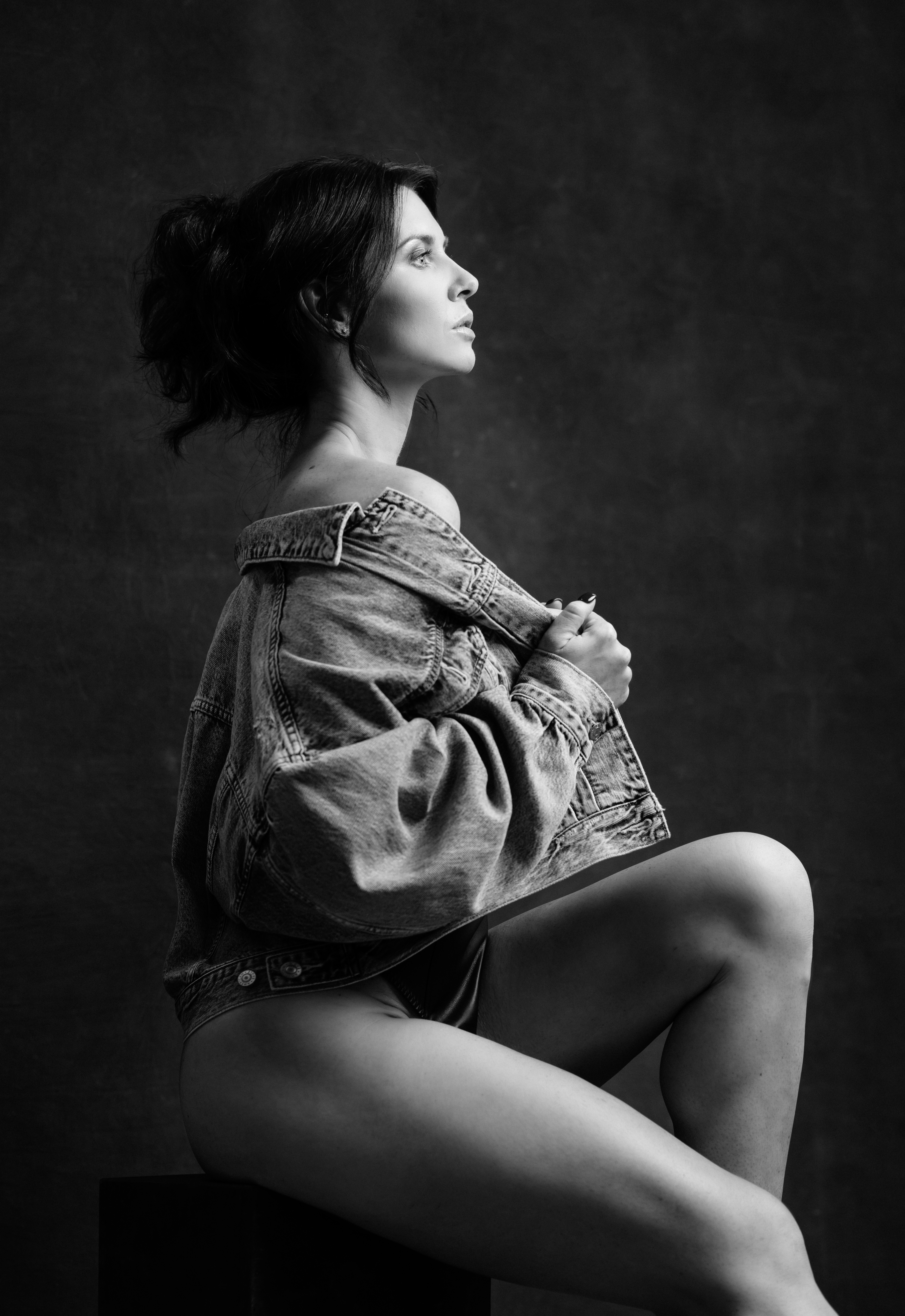

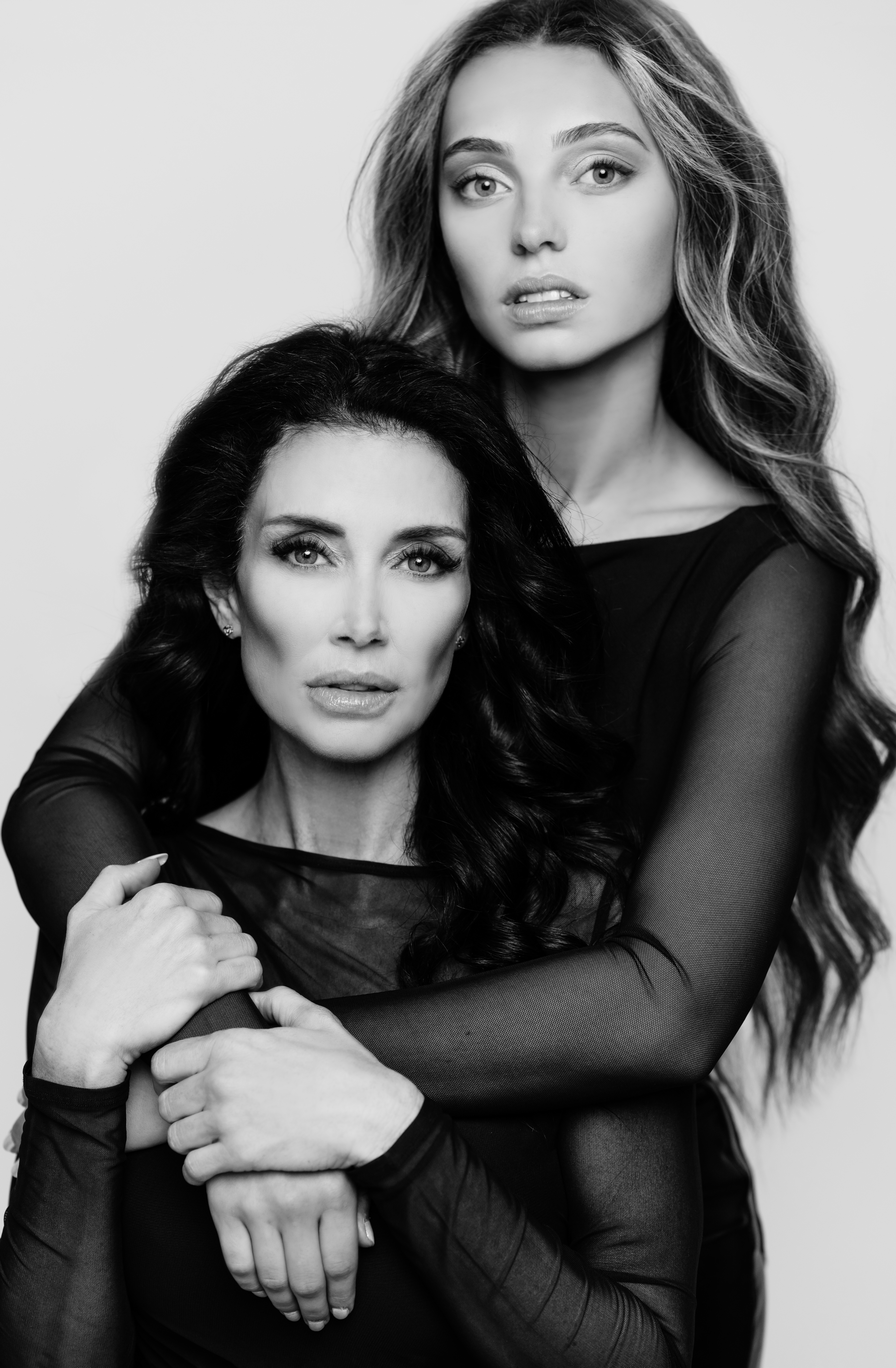
It doesn’t take a multiple light setup to create this either, you would be surprised at what you can do with just a single light and a V-Flat reflector using the black, negative fill side when you want to increase the contrast, or the white side to bounce light back to your subject or create highlights.
As we place lights, we want to imagine where that light is going to hit our subjects and where the shadow will fall, what vibe those aspects are going to give off, and what areas of the face and body are going to be showcased.
Once your lighting is set and your client is posed, the next piece of the puzzle comes down to expression; and this is a make or break for me in portraiture. Every other aspect of the image can be perfect – styling, lighting, settings, posing, but if you’ve left your subject in a blank mental space, without any type of emotional expression, all of that prep work was for nothing. It’s the emotion that makes the photo, and it’s that same emotion that black and white photography emphasizes. Work with your clients on how to give the expression you’re looking for; i.e. a small squint in the eyes for a more intense look, a slight parting of the lips for a relaxed expression, pushing the forehead out towards the camera and lifting the chin to exhibit strength and confidence, adding in a slight head tilt, or using movements that make the posing look real and unstaged. All of those aspects help to create an emotive image, whether it’s a headshot or a full body portrait.
Simplicity is key…
It doesn’t take intense posing, or high-level planning to attain this, but it does take practice. In order for your clients to become expressive with you, you must first guide them on how and where to find it within. Conversation, good music, and outstanding direction are among the things I personally do to achieve that. I also like to involve my clients in my emotional planning process as much as possible, so they understand the emotive goal we want to achieve, with clear examples of the feelings and situations we’ll be exhibiting.
Ultimately, the extent of a portrait comes down to the emotional exchange between you and your subject, and your ability to use light and shadow to create depth, yet keep the viewers eye on the subject.
This final, and second most important part after emotional expression and lighting is the actual stylizing of the black and white itself in post processing.
Are you looking to shoot a fashion style black and white? If so, we want a high impact, high contrast that deepens the shadows and brightens the whites, adding the fashion style edge that makes those photos pop. Are you going for a more classic black and white look? Focus on adding pops of contrast, deepening specific color channels for that subtle, old Hollywood feel that enhances clarity and texture. Or are you wanting a more easy-going black and white that looks incredible on any type of image. Dropping the highlights, and slightly deepening the shadows for a smooth and seamless monochrome.
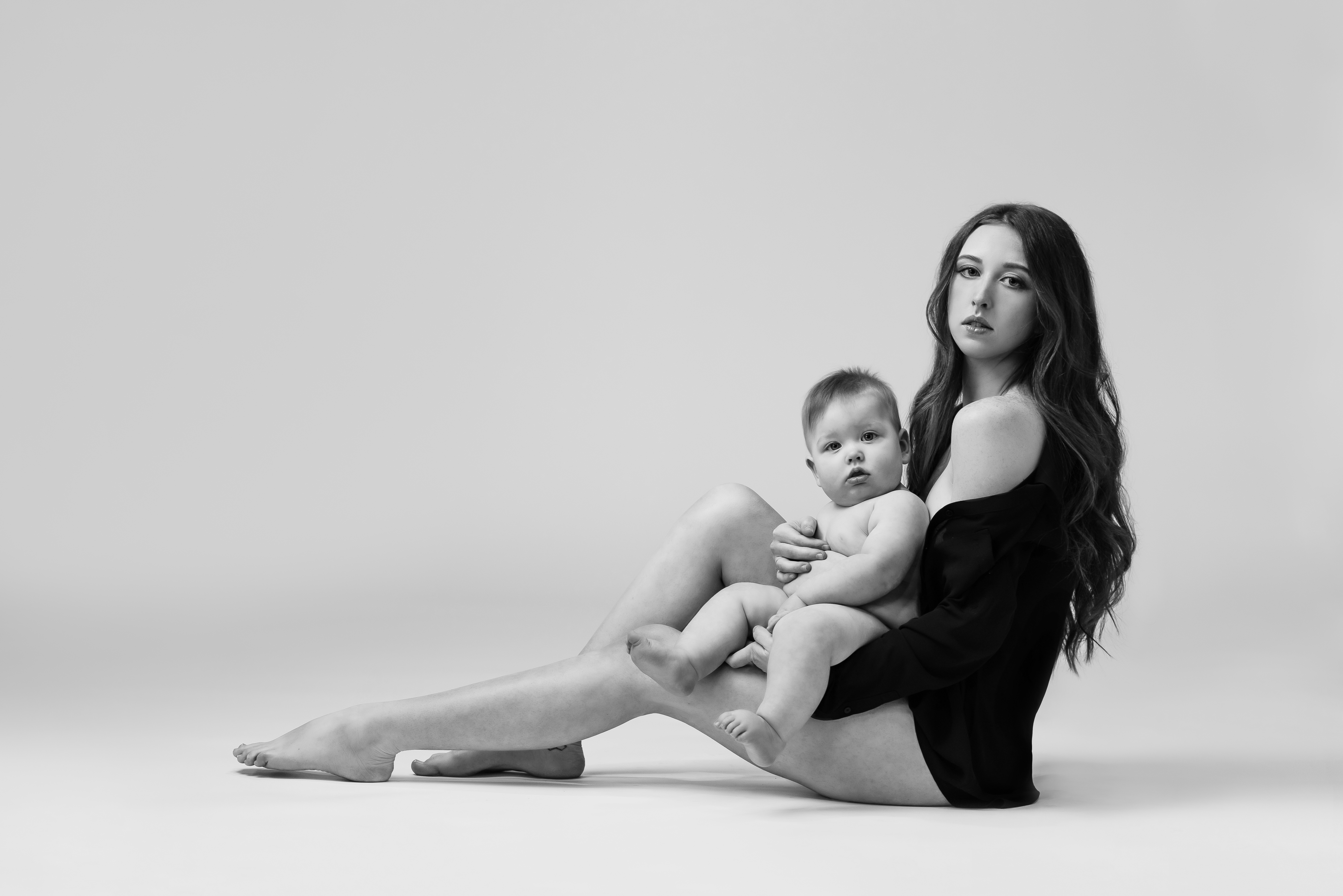
With black and white photography the options are endless, and ultimately it’s up to you to decide which direction you want to go and then make it your own. There’s not one way to accomplish this, and the beauty of black and white portraiture comes down to the subtle details of light and shadow and how we use them to bring out a bit of soul in our subjects.
Whitney Brown
Whitney Danielle Photography
www.whitneydaniellephotography.com
IG: @whitneydaniellephoto
Facebook: https://www.facebook.com/whitneydaniellephoto
Gear List:
Camera – Nikon Z7/Z9/D810
Lens – Nikon: 85mm 1.8, 50mm 2.8, 35mm 1.8
Lighting – Profoto, Godox, V-Flat



 WHITNEY BROWN